The Rising Problem of Fake Cards
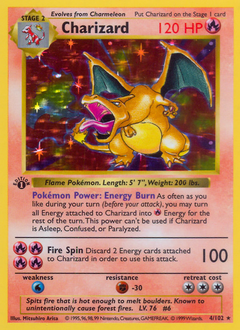
The Pokémon TCG market is bigger than it has ever been. A PSA 10 1st Edition Base Set Charizard cleared $420,000 at auction in 2022, and chase cards from modern sets like Evolving Skies and Surging Sparks routinely trade in the low five figures. With that money came an explosion of counterfeits — many of them surprisingly good.
The problem isn't limited to obvious eBay knockoffs. Investigators have found counterfeits inside graded slabs (PSA reholdered a small number of fakes in 2021–2023), bulk lots circulating at conventions, and even sealed booster packs reshrink-wrapped after card replacement. Every collector buying meaningful value should treat authentication as a non-optional step.
The good news: the vast majority of fakes fail at least one of the tests below. You don't need a forensic lab — a desk lamp, a phone camera, and ten minutes is usually enough to catch a counterfeit.
Visual Authentication Methods
Card Stock and Feel
Genuine Pokémon cards have a very specific weight and flex. They use a sandwich construction — two thin layers of glossy cardstock with a dark "blue core" in the middle.
- Light test. Hold the card up to a bright light. A genuine card will block almost all of it. Many counterfeits use a thinner stock that lets light through visibly when you cup your hands around the edges. This is the single fastest test.
- The rip test. The dark core is visible if you tear a genuine card, and counterfeits typically have a brown or grey core. Don't do this on a card you care about — it's only useful when you've already concluded the card is fake.
- Snap and flex. Real cards have a slight, springy flex. Brittle cards that crease easily or feel "floppy" are suspect.
Text and Font Analysis
The print runs on real cards are extremely consistent. Counterfeiters rarely match them exactly.
- HP numbers. Real HP digits have a distinctive shape — slightly rounded, evenly spaced. Fakes often use a generic sans-serif that's too uniform or too narrow.
- Evolution stage text. "Stage 1" / "Stage 2" / "Basic" text positioning above the artwork is tightly controlled on genuine prints. A fake card's text may sit a millimeter too high or too low.
- Copyright line. Bottom-edge copyright (e.g. © 1999, 2000 Wizards) is one of the easiest tells — fakes often miss a year, use the wrong company, or get the spacing wrong.
- Energy symbol clarity. On genuine cards the energy symbol in the attack cost has crisp edges; fakes blur the gradient.
Holographic Pattern Testing
Genuine holographic patterns are extremely consistent within a print run. Fakes use cheaper foil substrates that read differently.
- Pattern alignment. Tilt the card. A genuine Base Set holo has a uniform "starburst" — fakes often look mottled, grainy, or rainbow-like.
- Set symbol clarity. The small set symbol next to the card number should be clean, with crisp edges. A blurry symbol is a strong red flag.
- Holo bleed. Fakes sometimes have holographic foil leaking past the picture frame into the text box. This essentially never happens on real cards.
Card Back Analysis
Card backs are where many counterfeiters fail.
- Blue background shade. Genuine card backs use a specific muted blue. Fakes are often too dark, too bright, or have a green or purple tint.
- Pokéball design. The lower Pokéball detail is crisp on real cards. On fakes the white circle in the middle is often off-center or blurry.
- Border thickness. The yellow border around the back should be even on all four sides. Fakes frequently miscut and end up with one border noticeably thicker than the others.
- Print dots. Under magnification (your phone camera works), genuine cards show a precise rosette of CMYK printing dots. Fakes show irregular patterns or pixelation.
High-Tech Authentication
Professional Grading
The simplest path for high-value cards is to buy slabs from PSA, BGS, CGC, or TAG. Graders examine the card under magnification and catch the vast majority of fakes before encapsulation. When you buy a slab:
- Verify the cert number. Every slab has a unique number. PSA's free cert verification tool returns the original photos and grade — if the cert exists but the card pictured doesn't match what you're holding, you have a counterfeit slab.
- Check the holder construction. Genuine slabs have specific weights, fonts, and label printing. Reholdered fakes often use the wrong holder generation.
- Look for tampering. Resealed slabs leave hairline gaps along the seam and sometimes visible adhesive.
UV Light Testing
A cheap UV flashlight (the same kind sold for spotting cat urine) is one of the most useful authentication tools. Genuine Pokémon cards have a moderate, even blue-white glow under UV. Fakes typically show one of two failures:
- Bright white reaction. Modern fake cardstock often contains optical brighteners that glow much more intensely than the real thing.
- No reaction. Some counterfeits use bargain stock with no UV response at all — the card stays dark while a real card glows.
Most Commonly Faked Cards
If you're buying any of these raw, authenticate carefully:
- Base Set Charizard (all three variants) — the single most-faked card in the hobby
- Pikachu Illustrator — a $5M+ card that has spawned legions of fakes
- 1st Edition holos from Base, Jungle, Fossil
- Modern Special Illustration Rares — fakes of Umbreon VMAX Alt Art and Charizard ex SIR are circulating
- Japanese promo cards — language and small print runs make these easy targets
Red Flags When Buying
A few patterns appear on almost every fake-Pokémon sale we've seen:
- Price below market. A "PSA 10 Base Set Charizard for $5,000" is not a deal — it's bait.
- Refusal to provide detailed photos. A trustworthy seller will photograph all four edges, the back, and the slab seam on request.
- Bulk lots of "rare" cards. A box of "20 PSA 10s for $400" is almost always counterfeit.
- Stock-photo listings. If the eBay photo is generic, assume the actual card is not what was advertised.
- Unverified PSA certs. Always run the cert number before paying.
Using Mintlytics to Verify
Mintlytics' PSA Cert Verification tool lets you paste a cert number and confirm the grade, year, and original photos for any slab on the market. We also cross-reference deal prices against the public market — listings selling for 70% below the going rate get flagged in the Slab Sniper feed for additional review.
The investment angle is real: if you're putting four-figure money into a single card, one authentication step (a UV flashlight check, a cert lookup, a feel test) costs nothing and reliably catches the majority of fakes.
See live prices on Mintlytics
Mintlytics tracks live Pokémon TCG prices, PSA populations, Reddit sentiment, and AI forecasts for every card in this guide. Free to use — sign up to start tracking your collection.